
The longer answer
Full disclosure: we're a certified LeafBlaster Pro installer. We chose it after seeing every guard style fail somewhere in KC — so this review tells you where it wins AND where it doesn't.
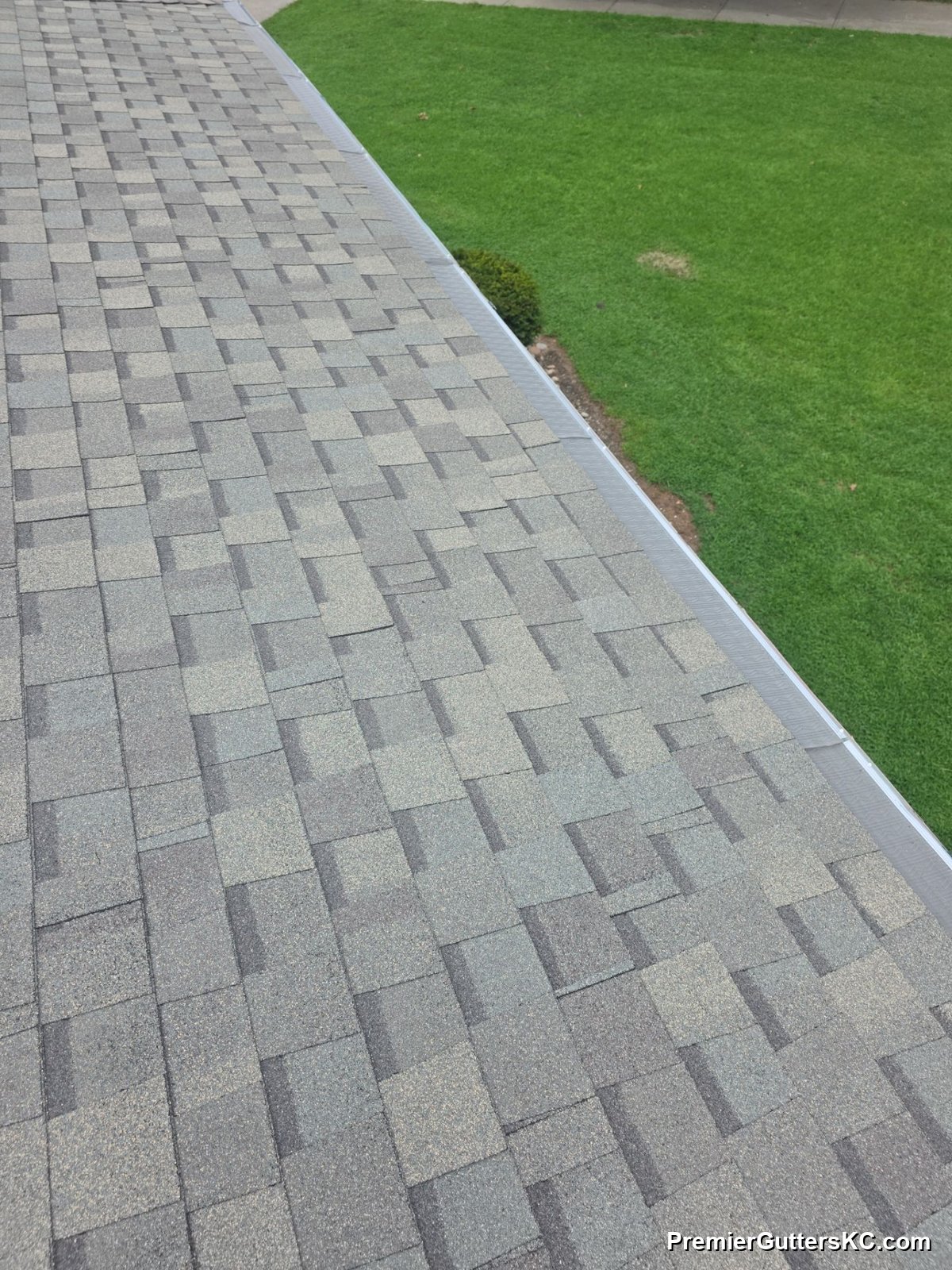
What LeafBlaster Pro gets right:
- 316 marine-grade stainless micromesh. Fine enough to stop shingle grit, maple helicopters, pine needles, and cottonwood fluff — the debris that defeats screens and perforated covers in KC.
- It works on KC's worst trees. Oak tassels and sweetgum balls sit on top and blow off. Solid reverse-curve covers ("gutter helmets") let fine debris ride the water right into the gutter; micromesh physically can't.
- Lifetime no-clog warranty — the strongest promise in the category, and we back it with our own 10-year workmanship warranty on the install.
- Roughly a third of LeafFilter's quoted prices in KC for the same micromesh principle. Big-brand quotes here routinely run 2-3x for equivalent protection.
The honest limitations:
- It's only as good as the gutters under it. Micromesh on sagging, back-pitched, or failing gutters is wasted money. We inspect first and fix pitch or replace runs before installing — walking away from guard jobs on bad gutters is part of doing this right.
- Extreme downpours can sheet over any guard. Rare on properly pitched systems, but nobody should promise you physics-proof gutters.
- You still rinse the mesh occasionally. A garden-hose rinse every year or two keeps pollen film from slowing intake. That's minutes, not ladders-and-scooping — but it's not "never think about it again."
Bottom line: for KC's tree mix and storm pattern, micromesh is the right technology and LeafBlaster Pro is the best value implementation of it we've found. Compare styles yourself: LeafBlaster Pro vs other gutter guards, or try the 60-second guard picker quiz.