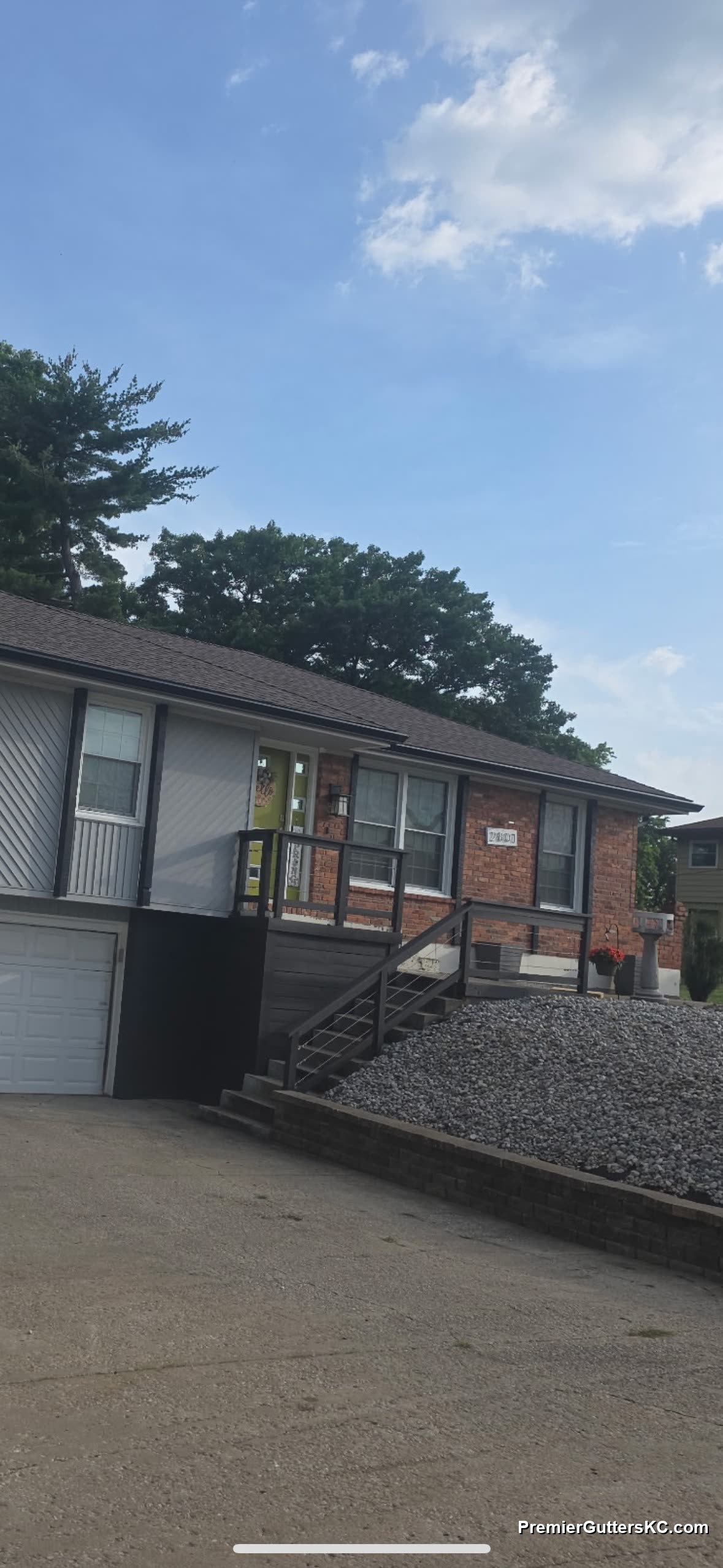
Built your 1990s KC home in Olathe, Lee's Summit, or Liberty? The original aluminum gutters are 25-35 years old. If you haven't replaced them, you're seeing the wear right now.
The 1990s KC builder-grade reality
KC's biggest building boom of the late 20th century happened 1985-2000, especially in Johnson County (Olathe, OP, Leawood) and east KC (Lee's Summit, Independence, Blue Springs). The gutters installed on those homes were almost universally:
- 5″ K-style aluminum (the right size for most of these homes)
- .025″ gauge (the thinnest builder-grade aluminum)
- Spike-and-ferrule hangers spaced 32-36″ on-center (too far apart for KC snow load)
- White or brown enamel finish (not premium Kynar — fades faster)
That spec is acceptable for 20-25 years. It's now 25-35 years old in most cases. Failing.
What specifically is failing
1. Hangers
Spike-and-ferrule hangers have loosened from 25-30 years of freeze-thaw cycles. You can probably press up on the gutter and feel give. Most gutters in 1990s KC homes are now structurally sagging or pulled forward from the fascia.
2. Sealant at miters
Original caulk has dried out and cracked at every mitered corner. You probably see staining streaks below corner joints, or visible drips during rain.
3. Paint finish
Lower-grade enamel finishes have faded significantly. White gutters now look cream or yellow. Brown gutters have gone chalky. Some sections show paint peeling and exposed bare aluminum.
4. Fascia behind the gutter
30 years of slow water seepage from failing gutters has rotted the wood fascia behind them. You may see staining or visibly soft wood. Sometimes the fascia is so soft that new hangers won't even hold — the whole fascia board needs replacement.
5. Downspouts
Often original downspouts have been crushed by mowers, knocked loose by branches, or simply rusted at the elbows. Many 1990s installs only had 4 downspouts on a 200-ft system — not enough for modern KC storm volumes.
The "patch vs replace" decision
If you have ONE issue (one sag, one leak), repair makes sense for $300-$700.
If you have multiple issues (typical for 1990s homes), you're in replacement territory. Patching one section while three others fail in 6 months is throwing good money after bad.
What to upgrade to
The 2026 spec for a typical 1990s KC home replacement:
- 5″ or 6″ K-style aluminum, .032″ gauge (premium, 30-40 yr life)
- Hidden hangers, 24″ on-center (modern standard)
- Stainless steel screws (won't rust through fascia)
- Sherwin-Williams Kynar 500 finish (30-year fade warranty)
- One additional downspout (modern KC storms need more capacity)
- Underground extensions for all downspouts (KC clay soil)
- LeafBlaster Pro guards (if you have mature canopy — most 1990s neighborhoods do by now)
Typical 1990s home replacement cost in KC (2026)
- Olathe ranch (140 lf, 5″): $1,400-$2,200
- Lee's Summit 2-story (180 lf, 5″): $1,900-$3,200
- Leawood 2-story (200 lf, 6″): $2,400-$3,800
- OP executive 2-story (240 lf, 6″): $2,900-$4,800
- Add LeafBlaster Pro: +$1,400-$3,200
- Add fascia repair (10-30 lf typical): +$180-$720
- Add underground extensions (5-6 downspouts): +$1,500-$3,500
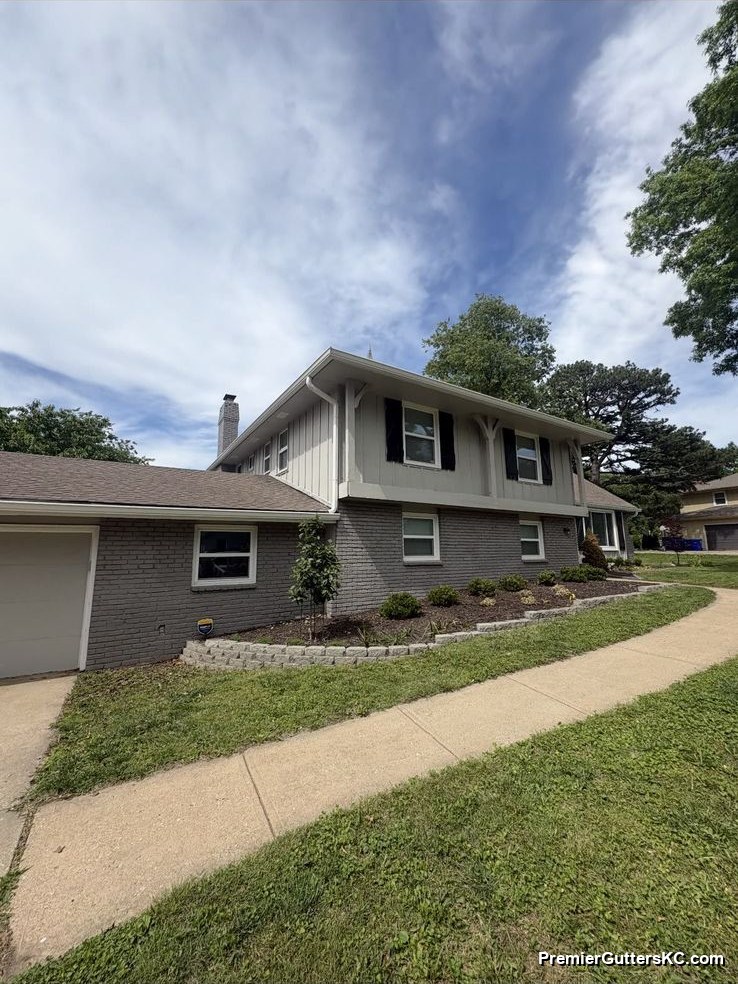
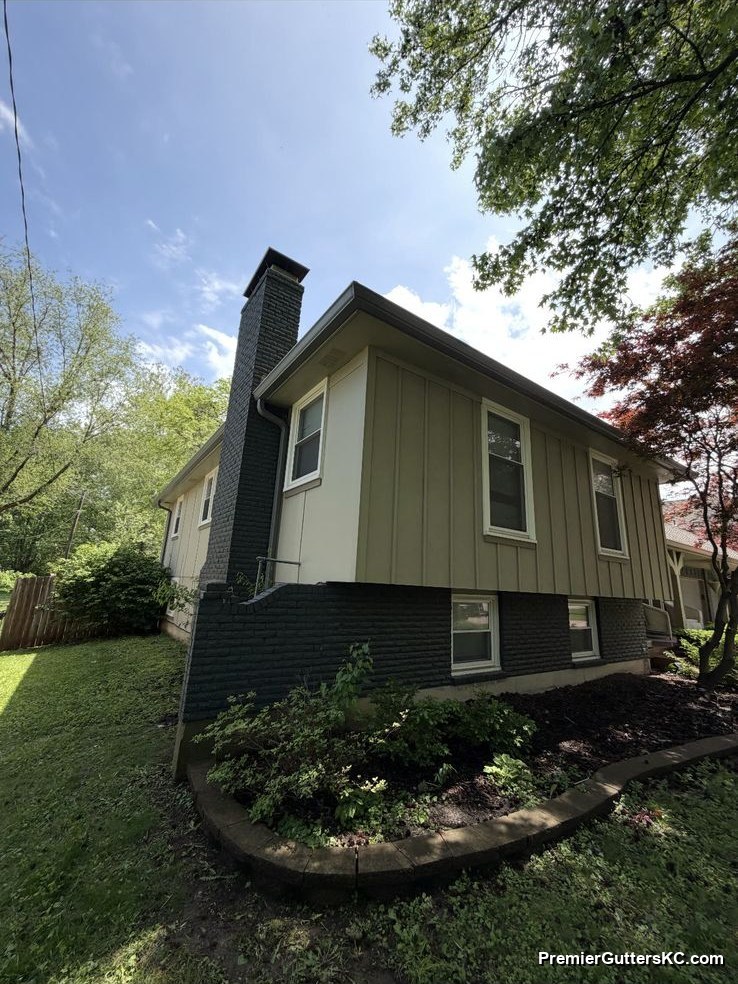
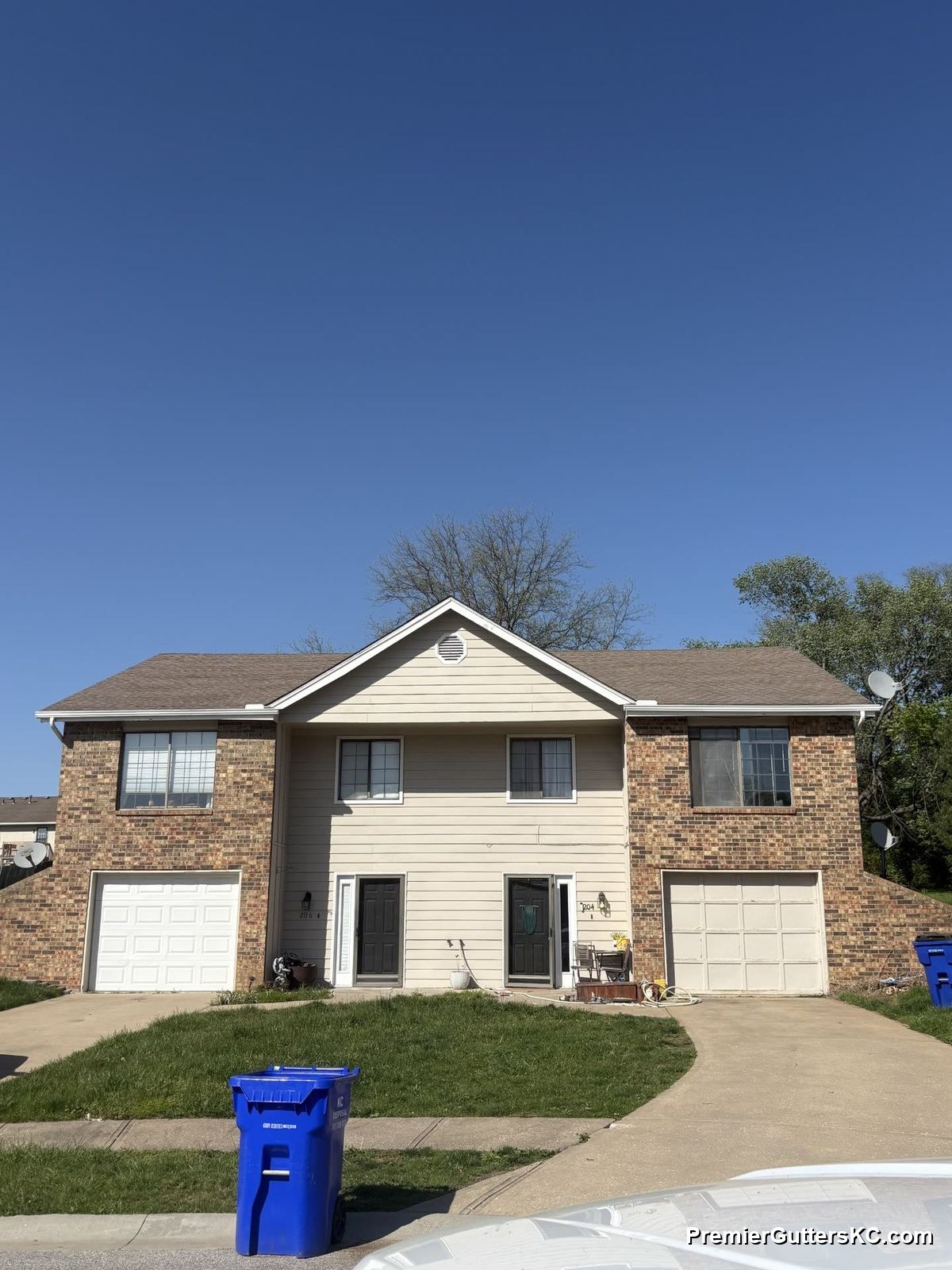
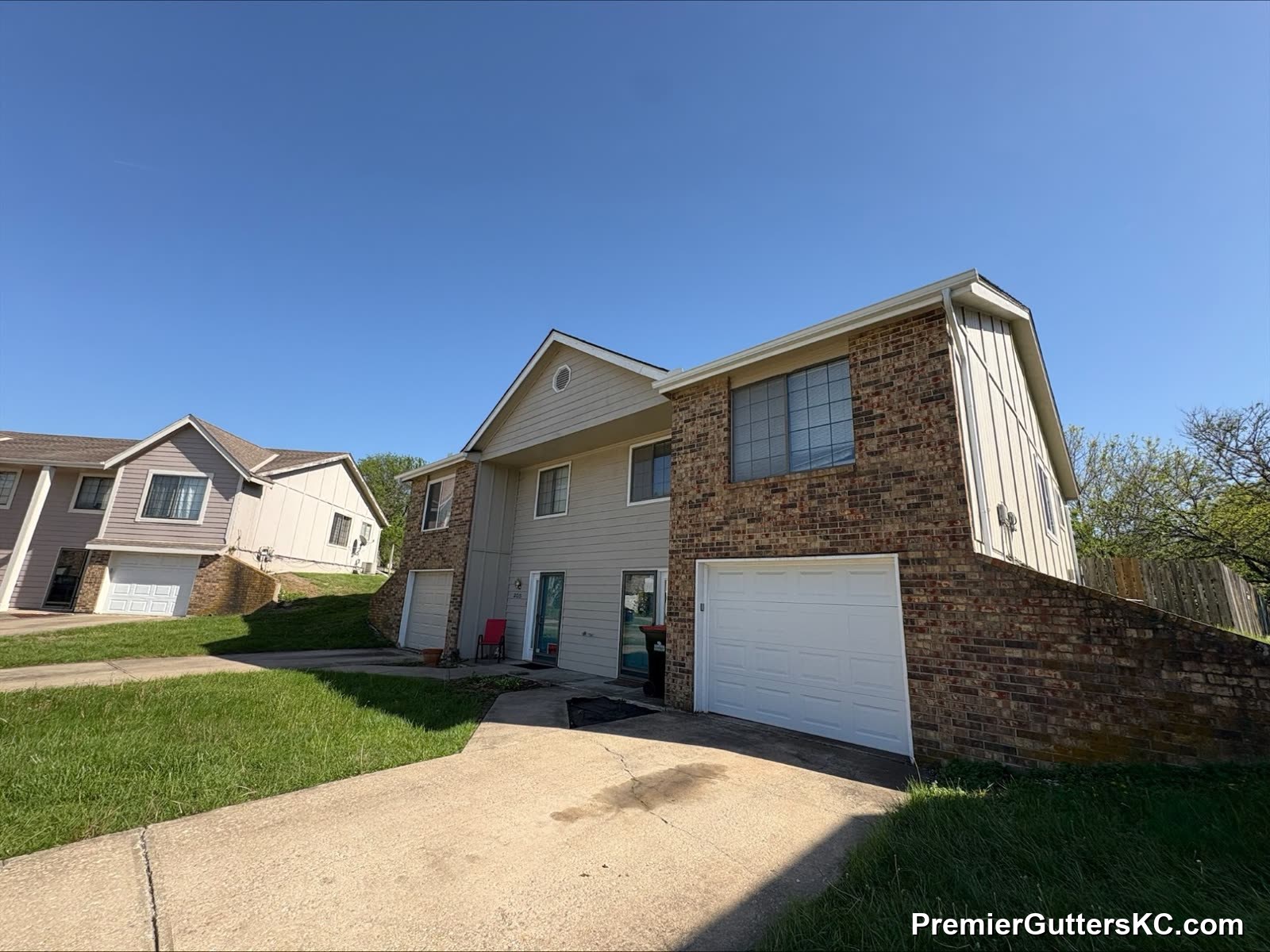
Real 1990s KC home replacements we've done